
Give Claude Code the business context it's missing.
Claude Code already writes great code. Commit your Magnowlia ontology into the repo your engineers work in, and tell Claude Code to use it — now it writes code that references your real metric definitions, inherits your access rules, and stays consistent with your analytics. No broker, no new infrastructure. Just a file your engineers already version alongside the code it governs.
Prompts your engineers can write
What your ontology unlocks for Claude Code
Shared definitions, not re-encoded ones.
Generated application code references the same metric definitions your analytics uses. No more "what is DAU" drift between the dashboard, the backend, and the internal tool.
Refactors that propagate.
Rename a warehouse column once. The ontology updates. Claude Code finds and updates every call site across every service.
Governance inherited automatically.
Access policies declared in your ontology apply to generated code. Internal tools can't accidentally expose restricted PII or bypass a row filter.
Onboarding measured in minutes.
New hire asks "what metrics do we have?" — Claude Code reads the ontology and answers with definitions, dimensions, and owners. Replaces spelunking through docs and Slack.
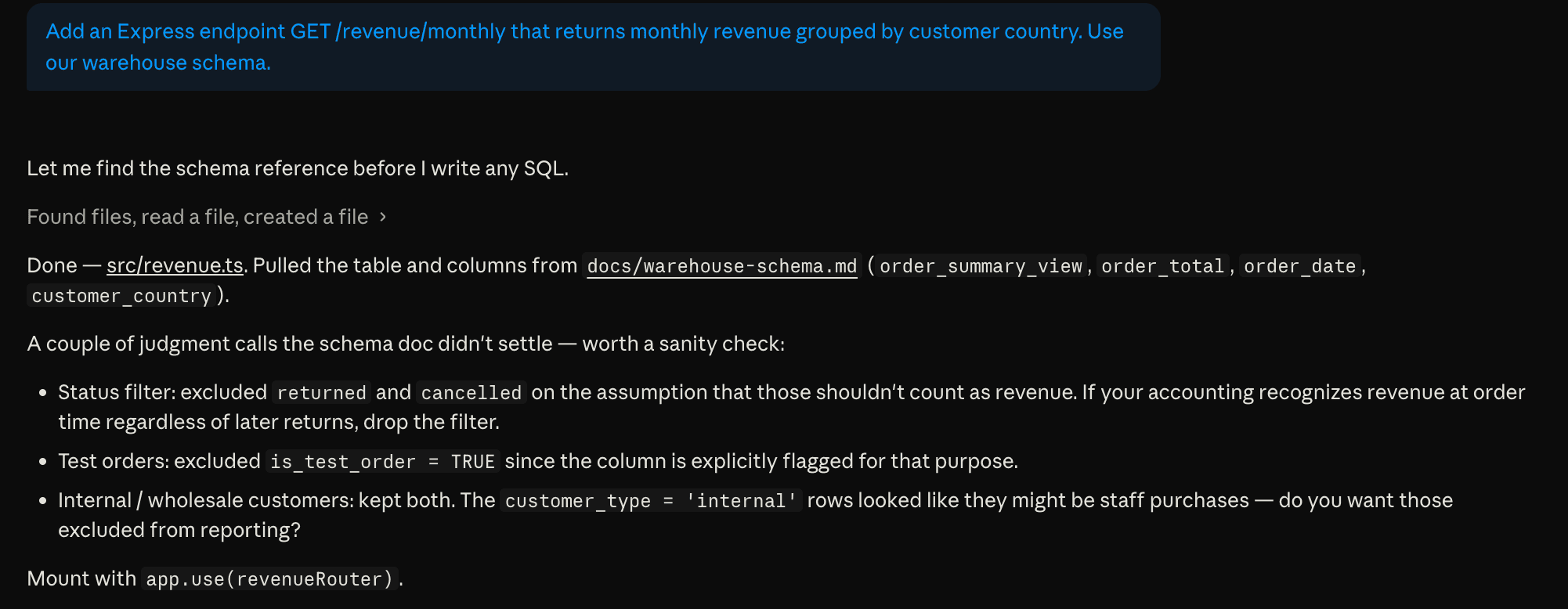
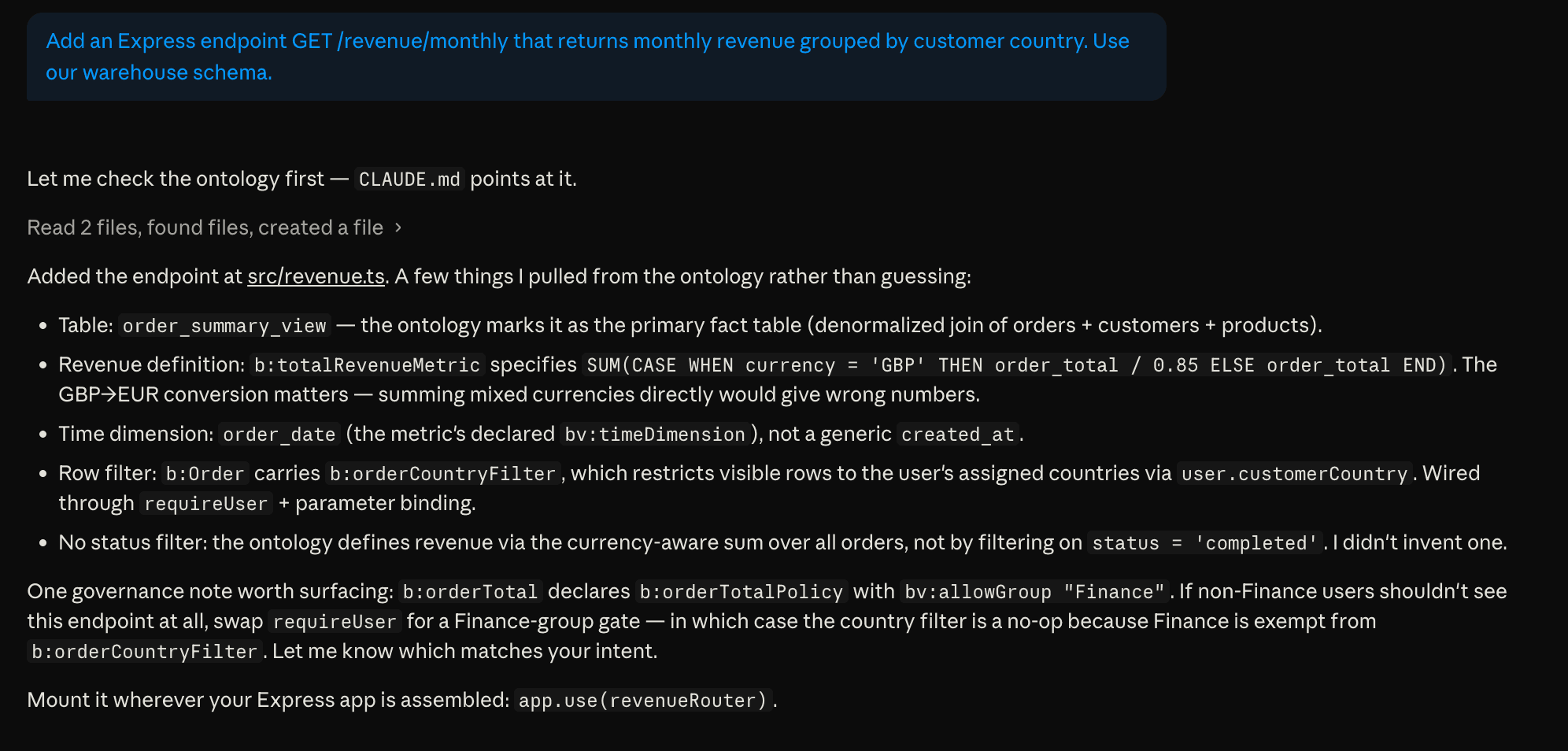
Same prompt. Ontology changes everything.
Without the ontology, Claude Code guesses. With the ontology in the repo and a short instruction in CLAUDE.md, it generates code that references your real definitions and inherits your access rules.
How to wire it up
No broker, no running server. Three steps, all of which your engineers already know how to do.
- 1
Export your ontology.
One click in Magnowlia produces an
ontology.ttlfile. It's a plain text file built on open standards. - 2
Commit it to your repo.
Put it wherever your conventions live —
docs/ontology/ontology.ttlis a common choice. Version it like any other artefact; diffs are reviewable, history is auditable. - 3
Tell Claude Code to use it.
Drop this snippet into your
CLAUDE.md. Claude Code picks it up automatically on every session.When generating code that touches business metrics or user-facing data, read docs/ontology/ontology.ttl first. Use the metric and dimension names defined there. Honor access policies declared alongside those definitions.
Plug your ontology into your engineers' AI workflow.
Commit one file, add one instruction, and Claude Code inherits your analytics, your governance, and your metric definitions — in every pull request.
Start for Free